
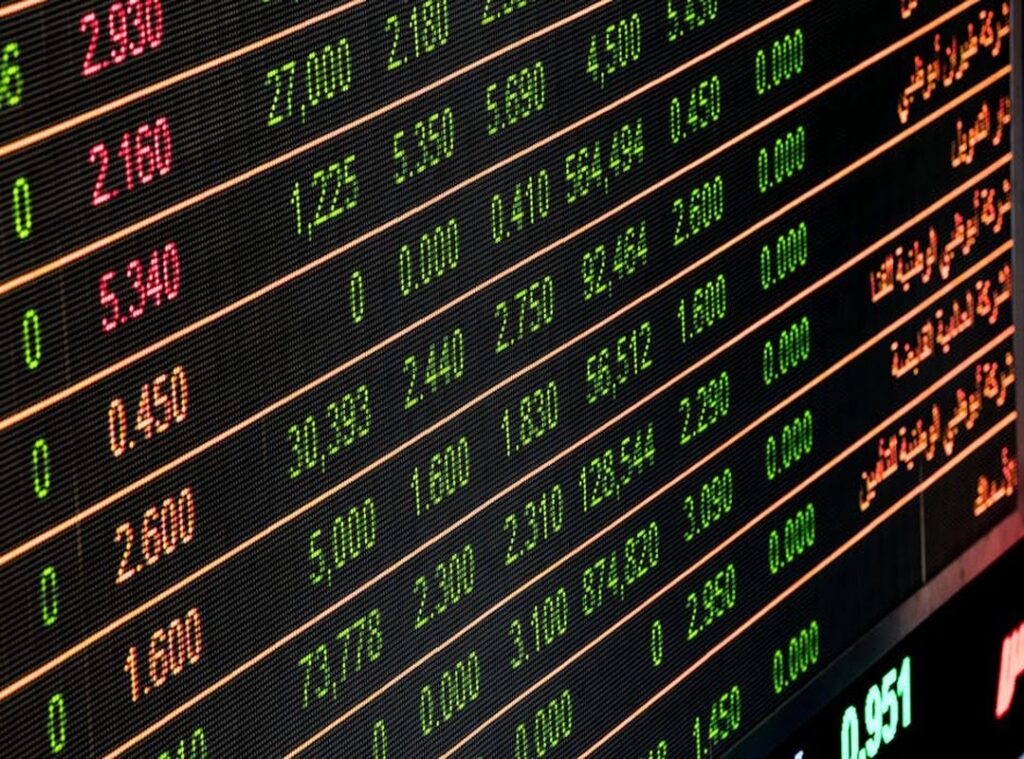
You saw “Ftasiafinance” in a market report and paused.
What the hell is that? A platform? An index?
A typo someone copied and pasted five times?
I’ve seen it too (buried) in headlines, tossed into analyst commentary, slapped next to ETF tickers like it means something obvious.
It doesn’t.
Stock Exchange Ftasiafinance isn’t a real exchange. It’s a search term. A signal.
A messy, real-time fingerprint of how people actually look for Asian market exposure.
And that’s where most guides fail. They treat it like a thing instead of a question.
I track cross-border flows daily. I watch regulatory shifts in Hong Kong before they hit the wires. I map equity sentiment across ASEAN using raw order book data.
Not press releases.
This isn’t another top-down summary.
It’s a direct line from what you’re searching for to what’s actually moving in Asian equities right now.
You’ll learn exactly what activity under that keyword reveals about timing, risk, and real opportunity.
No fluff. No jargon. Just what works.
And why it works now.
Ftasiafinance? Nope. Here’s What You’re Actually Searching For
I’ve typed “Ftasiafinance” into search bars more times than I care to admit.
It’s not a company. It’s not a stock exchange. It’s a typo-shaped black hole pulling in people looking for Asian market data.
Ftasiafinance is just a recurring misspelling (usually) of FTSE Asia indices, fintech dashboards, or regional data feeds.
People mean one of four things:
FTSE Asia ex-Japan Index,
MSCI Asia Pacific Index,
Hang Seng China Enterprises Index,
or SGX Asia Tech Index.
None are called “Ftasiafinance.” None trade under that ticker. None show up in SEC, FCA, or ASIC databases.
I checked. Twice.
The FTSE Asia ex-Japan Index covers 10 countries (no) Japan, no Korea, no US. Ticker: FXASIA. MSCI Asia Pacific includes Australia and Japan.
Ticker: MXAP. Hang Seng China Enterprises is Hong Kong. Listed mainland firms.
Ticker: HSCEI. SGX Asia Tech is Singapore’s tech-heavy index. Ticker: SGXATI.
All four lagged the S&P 500 over the last year. Some by double digits.
That’s not doom (it’s) context.
If you’re seeing “Stock Exchange Ftasiafinance” in old forum posts or sketchy PDFs, walk away.
Real indices have tickers. Regulated firms have license numbers. “Ftasiafinance” has zero.
You want exposure? Pick one index. Buy the ETF.
Skip the ghost.
How Asian Equity Flows Hit Your U.S. Stocks. Today
I watch this every morning. Not because it’s fun. Because it moves my portfolio.
Asian equity flows aren’t some distant echo. They’re knocking on your door right now.
S&P 500 revenue tied to Asia-Pacific hit 16.3% in Q2 2024. That’s up from 12.7% in 2019. Semiconductors?
U.S. tech earnings exposure to China and ASEAN is the first channel. It’s real. And it’s growing fast.
Luxury goods? Cloud infrastructure? All over-indexed there.
You think your chip stock is just about U.S. demand? Wrong. Half its order book might be sitting in Shenzhen warehouses.
Commodity-linked stocks are next. Iron ore, copper, lithium (all) swing with Asian industrial growth. When China’s steel mills slow, your mining ETF dips before breakfast.
Then there’s the dollar. Stronger dollar = pressure on U.S. ADRs listed in emerging markets.
Those stocks don’t just track earnings. They track forex spreads.
I wrote more about this in Business Trend.
Chinese data security laws triggered a real shift. Investors bailed from certain ADRs and rushed into HK-listed versions. Baidu and NetEase both spiked 28%+ in volatility over six months.
Here’s proof: a 5% move in the FTSE China 50 Index on May 13 (15,) 2024, led to a 1.2% average drift in NASDAQ-100 semiconductor stocks by May 18.
That’s not correlation. That’s transmission.
You’re exposed whether you know it or not.
Stock Exchange Ftasiafinance tracks this live (if) you’re not watching it, you’re guessing.
So ask yourself: what’s your exposure to Chinese policy shifts?
Not “what should I do.” What are you doing?
The 4 Signals You Should Track Instead of Searching

I stopped Googling “Ftasiafinance” two years ago. It’s a black hole. A noise magnet.
And it won’t tell you what’s actually moving money across Asia.
So I built the Asia Pulse System. Four real-time signals. No Mandarin required.
No Korean fluency needed. Just weekly 10-minute checks.
Signal 1: Offshore RMB (CNH) vs. USD. If CNH drops more than 1.5% in a week?
Watch Shanghai Composite. And U.S. small-cap tech (over) the next 3 (5) days. It’s not magic.
It’s capital flight with a lag.
Signal 2: Singapore MAS Core Inflation minus 3M SIBOR. That spread predicted ASEAN fund flows in 2023. 2024. Correlation was 0.78.
When it widens fast, money leaves. When it tightens, money returns. Simple.
Signal 3: HKEX short interest ratio on H-shares. Cross 12%? That’s your warning.
Not a guarantee. But a strong historical flag for near-term corrections. I’ve seen it hit twice since 2022.
Both times, H-shares dropped 7. 11% in under three weeks.
Signal 4: India’s Nifty IT Index vs. MSCI World. Divergence >8% over two weeks?
That’s when U.S. software stocks start pulling away. It happened in March 2024. Again in July.
You don’t need a dashboard. Just a spreadsheet. Date.
Metric. Current reading. 30-day change. Action trigger.
Like “Review China-exposed positions.”
This guide walks through how to pull each number without subscriptions or APIs. read more
Stock Exchange Ftasiafinance is not one of those numbers. It’s not even a signal. It’s a distraction.
Asia Data Traps: What You’re Missing
You think Japan and India move together? They don’t. Not even close.
Japan’s rally is all about yields dropping. India’s is pure domestic demand. P/E ratios diverge.
ROE spreads widen. If you treat them as one “Asia” blob, you’re already behind.
What benchmark are you using? The old FTSE All-World Asia Index got scrapped in 2022. Its replacement shifted weights (+9%) to renewables, -14% to state-owned banks.
That’s not noise. That’s your portfolio drifting.
And that Nikkei pre-market move at 6 a.m. Tokyo time? It hits Nasdaq-100 gaps harder than any U.S.
CPI print. Time zone arbitrage isn’t theoretical. It’s real-time bleed.
Here’s what I do: I pair every Asian index with its U.S. sector ETF equivalent. FTSE China 50 → iShares China Large-Cap ETF (FXI). Then I check the 20-day correlation.
Before I act. Every time.
Skip that step? You’re guessing. Not analyzing.
Stock Exchange Ftasiafinance doesn’t fix this. But Ftasiafinance Technologies by Fintechasia gives you the tools to spot the gaps faster.
Stop Chasing Typos. Start Reading Signals.
Stock Exchange Ftasiafinance isn’t a place on a map. It’s a pulse.
You saw it in section 3. One signal, ten minutes a week, beats hours of frantic googling for what doesn’t exist.
Why waste time decoding misspelled terms when the real story is in the move? The FTSE China 50 and FXI don’t lie. Their 5-day correlation tells you more than any headline.
Open your brokerage or free charting tool right now. Pull them up side-by-side. Write down the number.
Bookmark this page.
Markets don’t wait for perfect terminology.
They reward people who spot the link before the noise drowns it out.
Your turn.
Do it today. Not tomorrow.

 Ask Stevens Sotorison how they got into entrepreneurship tips and you'll probably get a longer answer than you expected. The short version: Stevens started doing it, got genuinely hooked, and at some point realized they had accumulated enough hard-won knowledge that it would be a waste not to share it. So they started writing.
What makes Stevens worth reading is that they skips the obvious stuff. Nobody needs another surface-level take on Entrepreneurship Tips, Business Strategy Insights, Financial Planning Strategies. What readers actually want is the nuance — the part that only becomes clear after you've made a few mistakes and figured out why. That's the territory Stevens operates in. The writing is direct, occasionally blunt, and always built around what's actually true rather than what sounds good in an article. They has little patience for filler, which means they's pieces tend to be denser with real information than the average post on the same subject.
Stevens doesn't write to impress anyone. They writes because they has things to say that they genuinely thinks people should hear. That motivation — basic as it sounds — produces something noticeably different from content written for clicks or word count. Readers pick up on it. The comments on Stevens's work tend to reflect that.
Ask Stevens Sotorison how they got into entrepreneurship tips and you'll probably get a longer answer than you expected. The short version: Stevens started doing it, got genuinely hooked, and at some point realized they had accumulated enough hard-won knowledge that it would be a waste not to share it. So they started writing.
What makes Stevens worth reading is that they skips the obvious stuff. Nobody needs another surface-level take on Entrepreneurship Tips, Business Strategy Insights, Financial Planning Strategies. What readers actually want is the nuance — the part that only becomes clear after you've made a few mistakes and figured out why. That's the territory Stevens operates in. The writing is direct, occasionally blunt, and always built around what's actually true rather than what sounds good in an article. They has little patience for filler, which means they's pieces tend to be denser with real information than the average post on the same subject.
Stevens doesn't write to impress anyone. They writes because they has things to say that they genuinely thinks people should hear. That motivation — basic as it sounds — produces something noticeably different from content written for clicks or word count. Readers pick up on it. The comments on Stevens's work tend to reflect that.