Stitch is one of those characters that just sticks with you. Mischievous and lovable, he’s a favorite for many.
I’m here to help you bring Stitch to life on paper. This guide is all about giving you a simple, step-by-step tutorial. Anyone can follow it, no matter your artistic skill level.
By the end, you’ll learn the basic shapes and key features that make Stitch so recognizable. We’ll cover everything from gathering your materials to drawing his face and full body.
Drawing Stitch is not just fun; it’s also totally achievable. Let’s dive in and get creative!
Gathering Your Art Supplies: What You’ll Need
Let’s start with the basics. You’ll need a piece of paper and a pencil. For general sketching, a #2 or an HB pencil works great.
If you want to add initial guidelines, go for a lighter pencil like a 2H.
A good eraser is a must, and i recommend a kneaded eraser. It lifts graphite without damaging your paper.
Trust me, it’s a game-changer.
Now, for those who want to add some color and detail, here are some optional supplies: colored pencils, markers, or fine-liner pens. These can help bring your drawing to life.
Starting with a light sketch is crucial, and it makes corrections much easier. You don’t want to be stuck with dark, hard-to-erase lines if you need to make changes.
Using a reference image of Stitch from the movie or online can help you capture his likeness accurately. This is especially useful for stitch rajzok, where getting the details right is key.
Pro tip: Always keep your tools within reach. It helps you stay in the flow and focus on your art.
Understanding Stitch’s Unique Anatomy
Before drawing, break down the key features that make Stitch recognizable. Start with his head shape: it’s a large, rounded oval, almost like a squashed circle.
His most prominent features, and the enormous, expressive ears. They’re long and rabbit-like but with a distinct notch cut out from the side.
- Eyes: Large, black, almond-shaped eyes set far apart.
- Mouth: A very wide mouth that stretches across his face.
- Nose: A large, dark, and somewhat flat oval shape positioned between his eyes.
His body proportions are unique. He has a compact, pear-shaped body with short, stubby arms and legs, giving him a powerful but cute appearance.
Smaller details matter too. There’s a tuft of fur on his head and darker blue markings on his back and around his eyes.
Understanding these features is crucial for capturing the essence of Stitch. Whether you’re sketching for fun or working on stitch rajzok, getting these details right makes all the difference.
Step-by-Step: Drawing Stitch’s Expressive Face
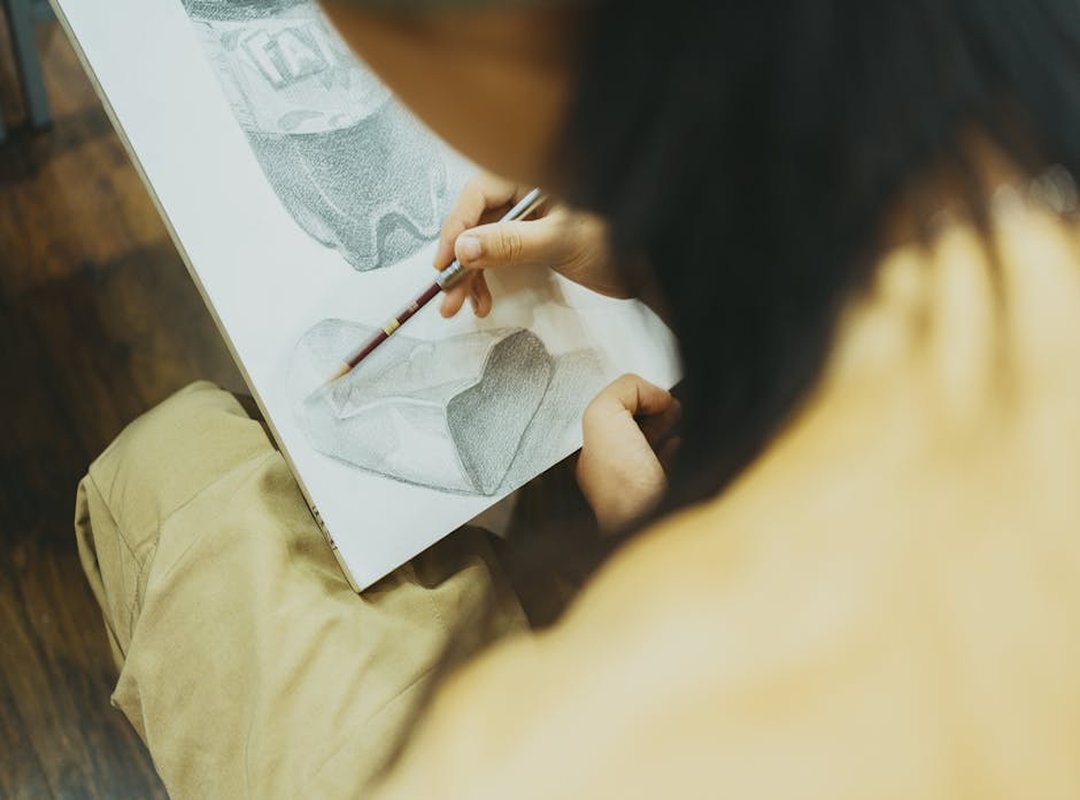
Let’s dive right into it. Start by drawing a large, slightly flattened circle for the main head shape. This gives you a solid foundation to build on.
Next, add central guidelines—one vertical and one horizontal—to help place the facial features symmetrically. These lines are your best friends when it comes to getting everything in the right spot. stitch rajzok
Now, let’s tackle the eyes. Draw them on the horizontal guideline, making sure they’re large and oval-shaped. Add a small white circle in each eye for that extra sparkle.
Trust me, these details make all the difference.
Moving on to the nose. Place a large oval shape where the guidelines intersect. It’s simple but crucial for capturing Stitch’s unique look.
Time to sketch his wide mouth below the nose. You can go for a simple grin or a toothy, mischievous smile. The choice is yours, and it adds a lot of character to your drawing.
Finally, let’s draw the ears. Start from the top sides of the head, creating long, curved shapes. Don’t forget to add the signature notch on the outer edge of each ear.
This little detail really brings Stitch to life.
By following these steps, you’ll not only create a fantastic stitch rajzok but also develop your skills in symmetry and proportion. Practice makes perfect, and with each drawing, you’ll get better and more confident.
Putting It All Together: Sketching Stitch’s Full Body
Alright, let’s move from the face to the body. Start by drawing a rounded, pear-like shape directly below the head for the torso.
Next, attach the short, powerful legs to the bottom of the torso. End them in rounded, padded feet with three visible claws.
Now, for the arms. Attach them to the sides of the upper torso. Draw his hands with three thick fingers and a thumb.
Time to add the final details. Put a light blue patch on his stomach and a dark blue pattern on his back. These colors really bring stitch rajzok to life.
For a simple, classic pose, try Stitch sitting down with his hands on his knees or standing with a slight wave.
Pro tip: Use your initial light sketch lines to build the form before adding darker, more permanent outlines. This way, you can make adjustments without messing up your final drawing.
Bringing Your Stitch Drawing to Life
Start with basic shapes, focusing on key features like the ears and eyes. Then, build out the full body.
Practice is the most important part of improving. Don’t be discouraged if your first attempt isn’t perfect.
Use a black fine-liner to go over the final pencil lines; this will make your stitch rajzok drawing pop.
Add color using your chosen materials to complete your artwork.
Try drawing Stitch in different poses or even create other characters from the movie. Keep experimenting and have fun!

 Connie Gamblesinson has opinions about business strategy insights. Informed ones, backed by real experience — but opinions nonetheless, and they doesn't try to disguise them as neutral observation. They thinks a lot of what gets written about Business Strategy Insights, Effective Branding Techniques, Financial Planning Strategies is either too cautious to be useful or too confident to be credible, and they's work tends to sit deliberately in the space between those two failure modes.
Reading Connie's pieces, you get the sense of someone who has thought about this stuff seriously and arrived at actual conclusions — not just collected a range of perspectives and declined to pick one. That can be uncomfortable when they lands on something you disagree with. It's also why the writing is worth engaging with. Connie isn't interested in telling people what they want to hear. They is interested in telling them what they actually thinks, with enough reasoning behind it that you can push back if you want to. That kind of intellectual honesty is rarer than it should be.
What Connie is best at is the moment when a familiar topic reveals something unexpected — when the conventional wisdom turns out to be slightly off, or when a small shift in framing changes everything. They finds those moments consistently, which is why they's work tends to generate real discussion rather than just passive agreement.
Connie Gamblesinson has opinions about business strategy insights. Informed ones, backed by real experience — but opinions nonetheless, and they doesn't try to disguise them as neutral observation. They thinks a lot of what gets written about Business Strategy Insights, Effective Branding Techniques, Financial Planning Strategies is either too cautious to be useful or too confident to be credible, and they's work tends to sit deliberately in the space between those two failure modes.
Reading Connie's pieces, you get the sense of someone who has thought about this stuff seriously and arrived at actual conclusions — not just collected a range of perspectives and declined to pick one. That can be uncomfortable when they lands on something you disagree with. It's also why the writing is worth engaging with. Connie isn't interested in telling people what they want to hear. They is interested in telling them what they actually thinks, with enough reasoning behind it that you can push back if you want to. That kind of intellectual honesty is rarer than it should be.
What Connie is best at is the moment when a familiar topic reveals something unexpected — when the conventional wisdom turns out to be slightly off, or when a small shift in framing changes everything. They finds those moments consistently, which is why they's work tends to generate real discussion rather than just passive agreement.